
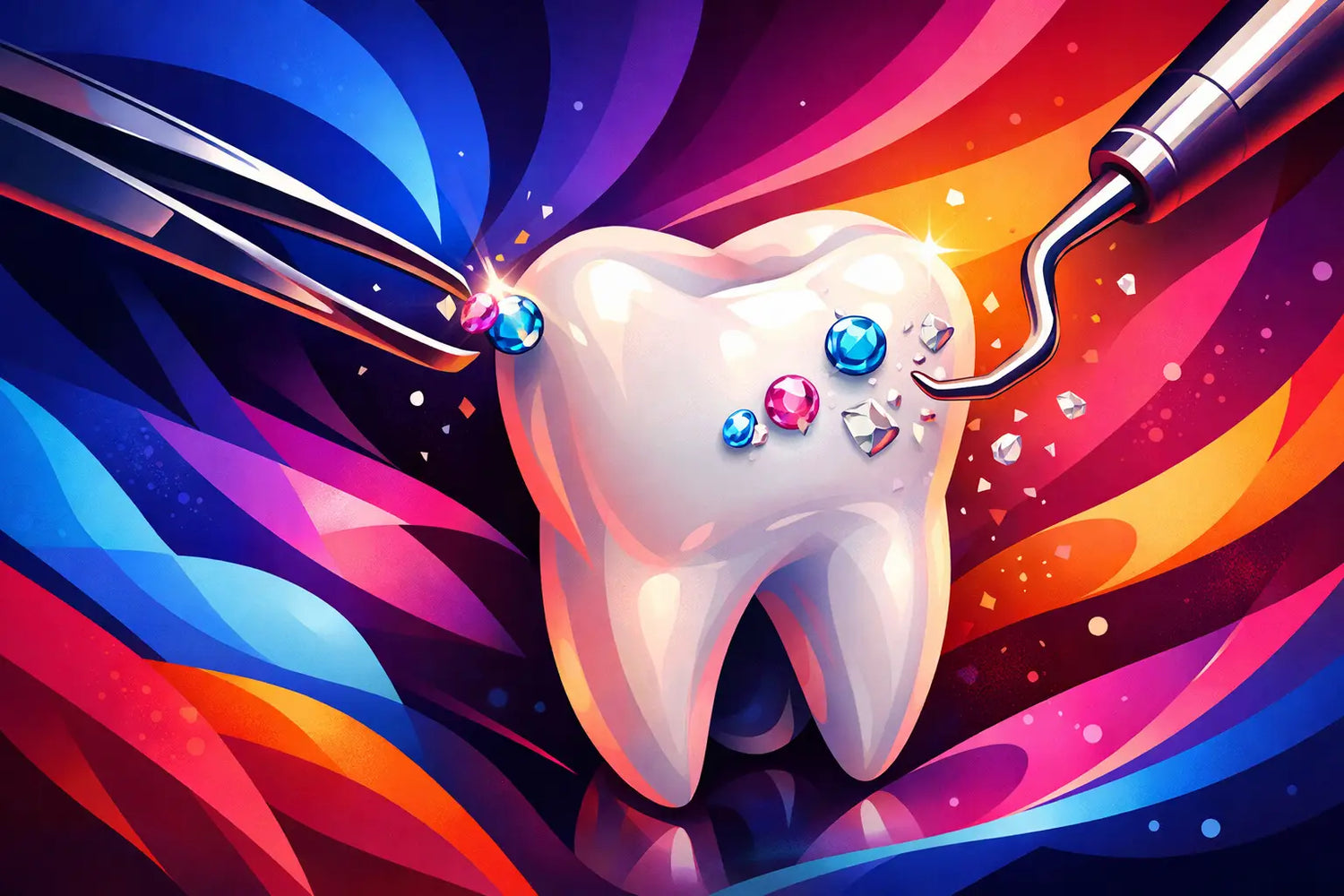
That tiny sparkle looked perfect for a while - until it didn't. Maybe your style changed, the gem started lifting, or you just want a clean smile again. If you’re wondering how to remove Tooth Gems safely, the most important thing to know is this: your enamel matters more than the gem.
Tooth Gems are meant to sit on the surface of the tooth, not become part of it. That sounds simple, but removal can get risky fast if you start picking, scraping, or trying random hacks from social media. A little patience protects your smile and keeps the process much more low-stress.
How to Remove Tooth Gems Safely Without Damaging Enamel
The safest removal method depends on how the gem was applied, how long it has been on, and whether it already feels loose. If a gem was bonded properly, it may not slide off easily just because you want it gone today. That is usually a good sign for wear, but it also means you should avoid forcing it — especially when a high-strength dental bond was used during application.
If your Tooth Gem still feels firmly attached, the best option is professional removal by a dentist. Dentists have the tools to remove the gem and polish away leftover bonding material without scratching enamel. If you are worried about damage, sensitivity, or adhesive residue, this is the cleanest route.
If the gem is already lifting at the edges or feels like it may come off soon, you still should not pull it off with your fingers or use tweezers to pry it loose. Pressure in the wrong spot can chip the gem, irritate the tooth surface, or leave rough adhesive behind. Safe removal is less about speed and more about control.
When At-Home Removal Is and Isn’t a Good Idea
There is a difference between a gem that is naturally loosening and a gem that is tightly bonded. That difference matters.
At-home removal may be reasonable only if the gem is visibly loose, moving slightly on its own, or close to falling off already. Even then, you should be gentle and realistic. You are not trying to detach a stubborn accessory at any cost. You are checking whether it is ready to come away with minimal pressure.
At-home removal is not a good idea if you feel pain, see redness around the gumline, notice tooth sensitivity, or if the gem feels completely fixed in place. It is also not smart if you are thinking about using sharp tools, nail glue remover, acetone, metal picks, or anything not made for oral use. Those shortcuts can turn a beauty moment into a dental bill.
What Not to Do When Removing a Tooth Gem
This is where a lot of people go wrong. A Tooth Gem is small, so it is easy to assume removal is no big deal. But enamel does not grow back, and adhesive can be tougher than it looks.
Do not scrape at the gem with a nail file, cuticle pusher, safety pin, or dental tool bought online. Do not use household glue removers or alcohol-heavy chemicals in your mouth. Do not bite hard objects trying to knock the gem off. And do not keep testing it every few minutes with your fingernail. Repeated picking can weaken the surrounding bond in an uneven way and rough up the area.
If you remember one thing, make it this: if removal starts to feel forceful, it is no longer safe.
A Gentle Approach if the Gem Is Already Loose
If your gem is hanging on by a little bit and seems ready to come off naturally, start by washing your hands and brushing gently so the area is clean. You want a clear view of the gem and surrounding tooth surface. Stand in good lighting and check whether it moves without effort.
If it barely shifts, stop there. That means it is not ready. If it feels like it may release with very light pressure, use a clean cotton swab or gauze for grip rather than hard tools. The motion should be soft and controlled. If it does not come away easily, do not keep going.
Once the gem comes off, the surface of the tooth may still feel slightly uneven because of remaining adhesive. That does not mean you should buff it yourself with abrasive products. Whitening scrubs, rough polishing tools, and aggressive brushing can wear down enamel. Leftover bonding material is another reason professional polishing is often worth it, even if the gem detached at home.
How to Remove Tooth Gems Safely if Adhesive Is Left Behind
A lot of people expect the whole process to end once the gem is off. In reality, the adhesive is often the bigger issue. Clear bonding material can cling to the enamel and feel rough or look dull under certain lighting.
If there is residue left on the tooth, resist the urge to scratch it away. Do not use metal tools or abrasive powders. A dentist can polish off residual adhesive much more safely than any at-home method. If the area feels smooth enough and there is no discomfort, you can keep the tooth clean with regular brushing and wait for a professional opinion rather than experimenting.
This is one of those it-depends situations. A tiny amount of residue may not be urgent, but thick or noticeable bonding should be assessed properly. The goal is a clean finish, not a rushed one.
Signs You Should See a Dentist Right Away
Some situations are not wait-and-see. If you notice sharp pain, sensitivity when drinking cold water, visible damage to the tooth, gum irritation, swelling, or bleeding, book a dental visit. The same goes for a gem that broke during removal or adhesive that feels jagged.
You should also get help if the gem was applied with a strong dental bond and has never loosened at all. A securely attached gem is not a problem by itself, but it does mean removal needs more precision. Trying to overpower that bond at home is where enamel damage becomes much more likely.
For first-timers especially, professional removal can feel less glamorous than DIY, but it is often the smarter beauty move. A radiant look starts with healthy teeth.
Aftercare Once the Gem Is Off
After removal, keep your routine simple. Brush with a soft-bristled toothbrush, use a non-abrasive toothpaste, and avoid overbrushing the area. If the tooth feels a little sensitive, skip very hot or very cold foods for a day or two and pay attention to whether the feeling fades.
Do not immediately reapply another gem to a tooth that feels irritated or rough. Let the surface recover first. If you plan to wear another gem later, make sure the tooth is smooth, clean, and free from leftover adhesive before starting over. A better reset gives you a better result.
This is also a good time to check in with how you want your next Tooth Gem look to wear. Some people want a short-term sparkle for a specific vibe or event. Others want something that stays put longer. The removal experience often helps you decide what kind of application and aftercare support you want next time.
The Best Way to Protect Your Smile Long Term
If you love the look of Tooth Gems, safe removal starts way before removal day. It starts with proper application, quality materials, and realistic expectations about wear time. The better the gem is applied, the less likely you are to mess with it, and the easier it is to manage the full life cycle from placement to removal.
That is why educational support matters just as much as style. Brands like SelfGem make the trend feel more accessible, but the smartest approach is still one that treats your enamel with respect. Sparkle should feel fun, not stressful.
A Tooth Gem should add to your look, not leave you worrying about damage. If it is loose, be gentle. If it is stubborn, let a dentist handle it. Your smile carries the whole look, and it deserves that level of care.
When in doubt, choose the option that keeps your teeth smooth, strong, and camera-ready for whatever style you try next.

