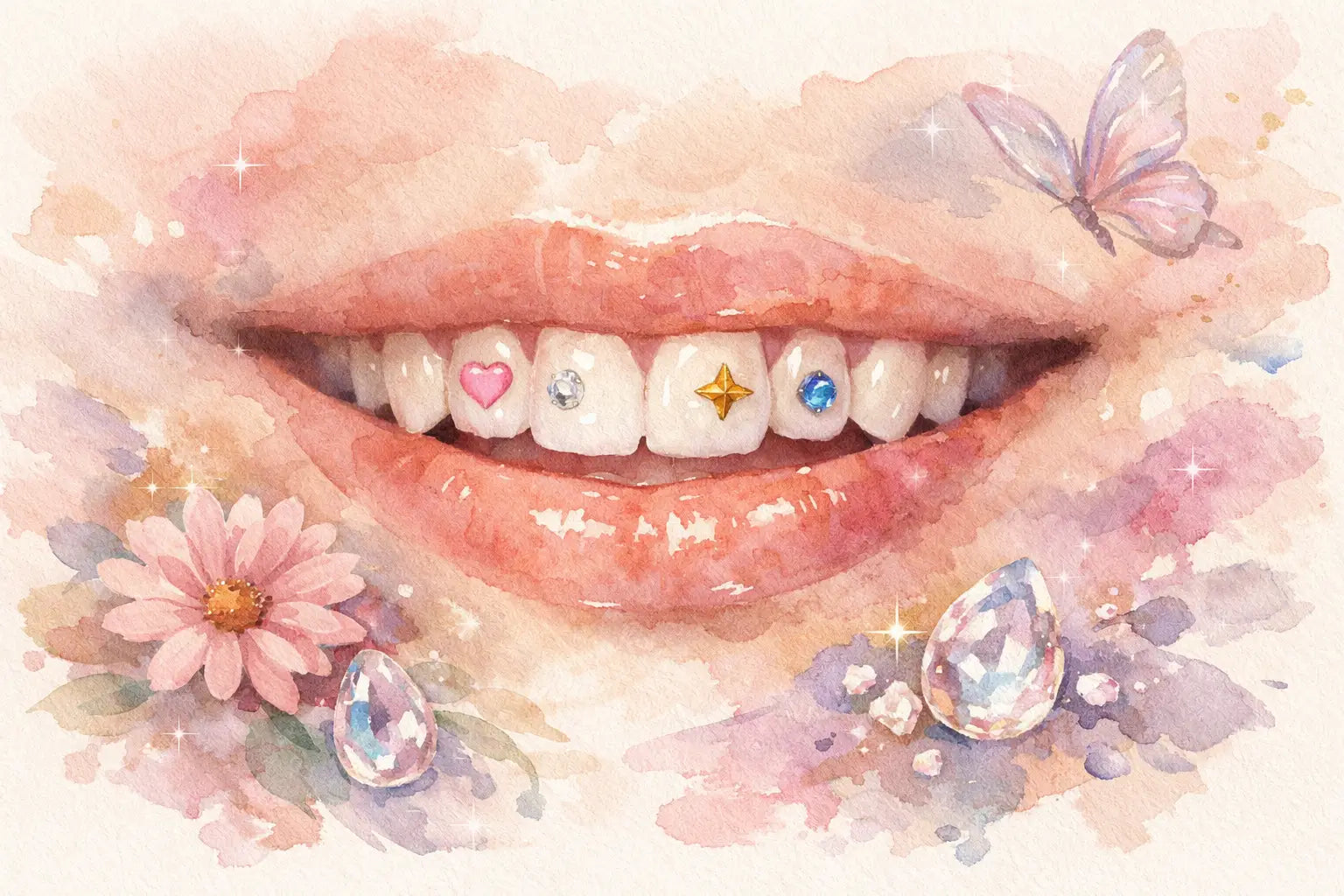
Una gema dental es pequeña, pero la sensibilidad puede ser señal de algo más importante. Eso es relevante porque la joyería dental decorativa se asienta sobre la superficie del esmalte. Si tu esmalte está sano y tu sensibilidad es leve u ocasional, una gema aún podría ser viable. Si tu diente ya siente un dolor agudo, reacciona al frío y al calor constantemente o tiene daños visibles, la gema no es lo primero en lo que debes centrarte.
Cuándo las gemas dentales para dientes sensibles pueden estar bien
La sensibilidad dental no es igual en todos los casos. Algunas personas experimentan una sensibilidad temporal tras un blanqueamiento. Otras se enfrentan al desgaste del esmalte, la retracción de las encías, caries, fisuras o al bruxismo. Se trata de situaciones muy diferentes que no conllevan el mismo nivel de riesgo.
Si su sensibilidad es leve y la superficie del diente está intacta, una gema aún puede ser una opción de belleza realista. Eso es especialmente cierto si la coloca en un diente frontal sano, sin caries, sin astillas y sin dolor al morder. En ese caso, la gema en sí no suele ser la causa de la sensibilidad. El problema mayor es si los pasos de preparación y adhesión se realizan de forma limpia y suave.
Si su sensibilidad es continua, intensa o se localiza en un solo diente, haga una pausa antes de aplicar cualquier cosa. Un diente sensible puede estar reaccionando a la dentina expuesta, a una pequeña grieta o a una caries que es fácil de pasar por alto en el espejo. Cubrir esa zona con joyería no solucionará el problema y puede hacer que ignore un diente que necesita cuidados reales.
Qué causa realmente la sensibilidad durante la aplicación de una gema dental
La mayor parte de las molestias que preocupan a la gente no provienen de la gema colocada en el diente. Por lo general, se deben a lo que sucede antes de que se coloque la gema.
El diente debe estar limpio y seco para que el adhesivo pueda sujetarse. Dependiendo del método, esto puede incluir productos de grabado y adhesión diseñados para ayudar a que la gema se mantenga en su lugar. Realizados correctamente, estos pasos funcionan en la superficie del esmalte. Pero si su diente ya está comprometido, incluso la preparación normal puede sentirse más intensa. Usando un adecuado grabado y adhesión el producto es una decisión mucho más inteligente que improvisar.
También hay una diferencia entre un diseño adecuado y un kit de gemas dentales
El blanqueamiento es otro factor a tener en cuenta. Muchas personas desean que su sonrisa brille al máximo antes de añadir una gema, pero el blanqueamiento puede aumentar la sensibilidad de forma temporal. Si tus dientes ya reaccionan con facilidad, combinar el blanqueamiento y la aplicación de la gema en un periodo de tiempo muy corto puede irritar tu boca sin necesidad. A veces, la mejor opción es simplemente espaciar ambos procedimientos.
¿Quién debería esperar antes de adquirir una gema?
Hay algunos casos en los que esperar es la decisión de belleza más inteligente.
If you have a cavity, a chipped front tooth, thinning enamel, gum recession near the area, or pain that keeps coming back, fix that first. The same goes for people who clench or grind hard enough to create tooth soreness. A gem placed on a tooth under stress may not wear as comfortably, and the issue underneath still needs attention.
También deberías esperar si tu sensibilidad comenzó hace poco y no sabes por qué. La sensibilidad repentina es diferente de la molestia leve y ocasional que algunas personas sienten al comer helado. Si la causa no está clara, intentar adivinarla no es lo más adecuado.
Cómo elegir la mejor opción para dientes sensibles
If you still want the look, your best strategy is keeping everything simple. A small gem on a healthy tooth is usually the most comfortable starting point. Large clusters, heavier shapes, or complicated placements can look amazing, but they are not always the best first move for someone already worried about comfort.
Placement matters too. Front teeth are common because they show well and are easier to monitor. But the exact tooth should feel healthy and smooth before anything is applied. If one side of your mouth is more sensitive than the other, listen to that.
Un kit apto para principiantes también marca una verdadera diferencia. Instrucciones claras, herramientas de aplicación que ayudan a mantener el área seca y productos fabricados específicamente para este propósito reducen las posibilidades de una aplicación descuidada. Esa es parte de la razón por la cual la gente busca sistemas completos en lugar de ir juntando los elementos uno por uno. Si eres nuevo en los detalles de belleza DIY, Kits de gemas dentales DIY preempaquetados puede ser una primera opción más sencilla.
Aplicar gemas dentales para dientes sensibles con más cuidado
Si tus dientes tienen una sensibilidad leve y decides seguir adelante, sé especialmente cuidadoso con la preparación. Comienza con la boca limpia, pero no frotes el diente de forma agresiva justo antes de la aplicación. El objetivo es que la superficie esté limpia, no irritada.
Asegúrate de que el diente que elijas esté sano, liso y libre de daños visibles. Mantén el área seca, sigue las instrucciones del kit de gemas dentales detenidamente y no sobrecargue el diente. Más producto no significa un mejor resultado. Por lo general, solo implica más limpieza y una mayor probabilidad de molestias.
Esta es también una de esas ocasiones en las que la paciencia vale más que la rapidez. Las prisas pueden provocar una mala colocación, un exceso de adhesivo o intentos repetidos que molestan al diente más de lo necesario. La clave está en una aplicación tranquila y cuidadosa.
SelfGem se basa en esa experiencia más sencilla en casa, con kits de bricolaje y materiales y herramientas que hacen que el proceso resulte más accesible para los principiantes. Los dientes sensibles siguen requiriendo precaución, pero contar con una configuración sencilla ayuda.
Aftercare matters more than people think
Una gema bien aplicada no debería causar una sensación de dolor constante en el diente. Si esto ocurre, algo no va bien. Es posible sentir una ligera molestia justo después de la aplicación, especialmente si estabas con ansiedad o mantuviste la boca abierta durante un rato, pero un dolor agudo no es algo que deba ignorarse.
Be gentle for the first day or two. Avoid picking at the gem with your nails or tongue, and skip hard biting directly into foods with that tooth if it feels tender. Keep brushing carefully with a soft-bristled toothbrush and stay on top of regular oral hygiene. A gem should fit into your routine, not replace it.
Si tus dientes suelen ser sensibles en general, este es un buen momento para usar productos fabricados para dientes sensibles y evitar alimentos muy calientes o muy fríos si te provocan molestias. No porque la gema exija un estilo de vida completamente nuevo, sino porque tu esmalte agradecerá menos drama. Si te pones Gemas dentales con más frecuencia, mantener los artículos esenciales en stock con un paquete de recarga
Señales de que una gema dental no está funcionando para tu sonrisa
La prueba de glamour es sencilla: si se ve bien pero el diente se siente peor, deja de fingir que todo está bien. El dolor persistente, los latidos, el dolor al morder o una sensibilidad que aumenta progresivamente son señales que deben tomarse en serio. Lo mismo ocurre con una gema que se siente áspera, se engancha de forma extraña o parece estar mal adherida.
Existe una diferencia entre la conciencia normal y un problema real. Un problema real no se calma. Exige atención.
Otro aspecto a tener en cuenta es el estado del diente tras la retirada. Una gema aplicada y retirada correctamente no debería dejar el esmalte con aspecto dañado. Sin embargo, si el diente ya estaba frágil antes de colocar la gema, esa debilidad subyacente puede hacerse más evidente después. Por eso es tan importante elegir el diente adecuado desde el principio.
¿Vale la pena una gema dental DIY si tienes sensibilidad?
Para algunas personas, sí. Si tu sensibilidad es leve, tu esmalte está sano y utilizas los productos adecuados con una técnica cuidadosa, una gema dental puede seguir siendo un detalle de belleza divertido y de bajo compromiso. Es una pequeña declaración, pero puede cambiar por completo la sensación de tu sonrisa.
For others, the better move is waiting. If your tooth is already asking for help, the stylish choice is taking care of it first and saving the gem for later. Beauty trends hit different when you are not stressing about pain.
El punto clave es ser honesto sobre tu salud bucal. No todos los dientes sensibles están descartados, pero tampoco todas las sonrisas están listas para una gema hoy mismo. Si la tuya lo está, elige algo pequeño, mantenlo limpio y asegúrate de que el proceso sea delicado. Un poco de brillo debería ser emocionante, no incómodo.
Kit de gemas dentales DIY Diamond Set 12 piezas lo hace fácil. Si prefieres elegir tus propias piedras y crear un estilo más personalizado, puedes crea tu propio kit de gemas dentales.
La mejor gema dental es la que te da ese aspecto radiante sin hacer que tu sonrisa trabaje horas extras para soportarla.