Una gema bonita es la parte divertida. Lo que hace que tu aplicación en casa se vea realmente limpia, se mantenga en su sitio y sea fácil de manejar es tener la lista de materiales del kit de gemas dentales adecuada antes de empezar. Si te estás preparando para tu primera sonrisa brillante, la diferencia entre un intento estresante y uno fluido suele depender de la preparación, las herramientas de colocación y los suministros de curado.
¿Qué debe incluir una lista de materiales de un kit de gemas dentales?
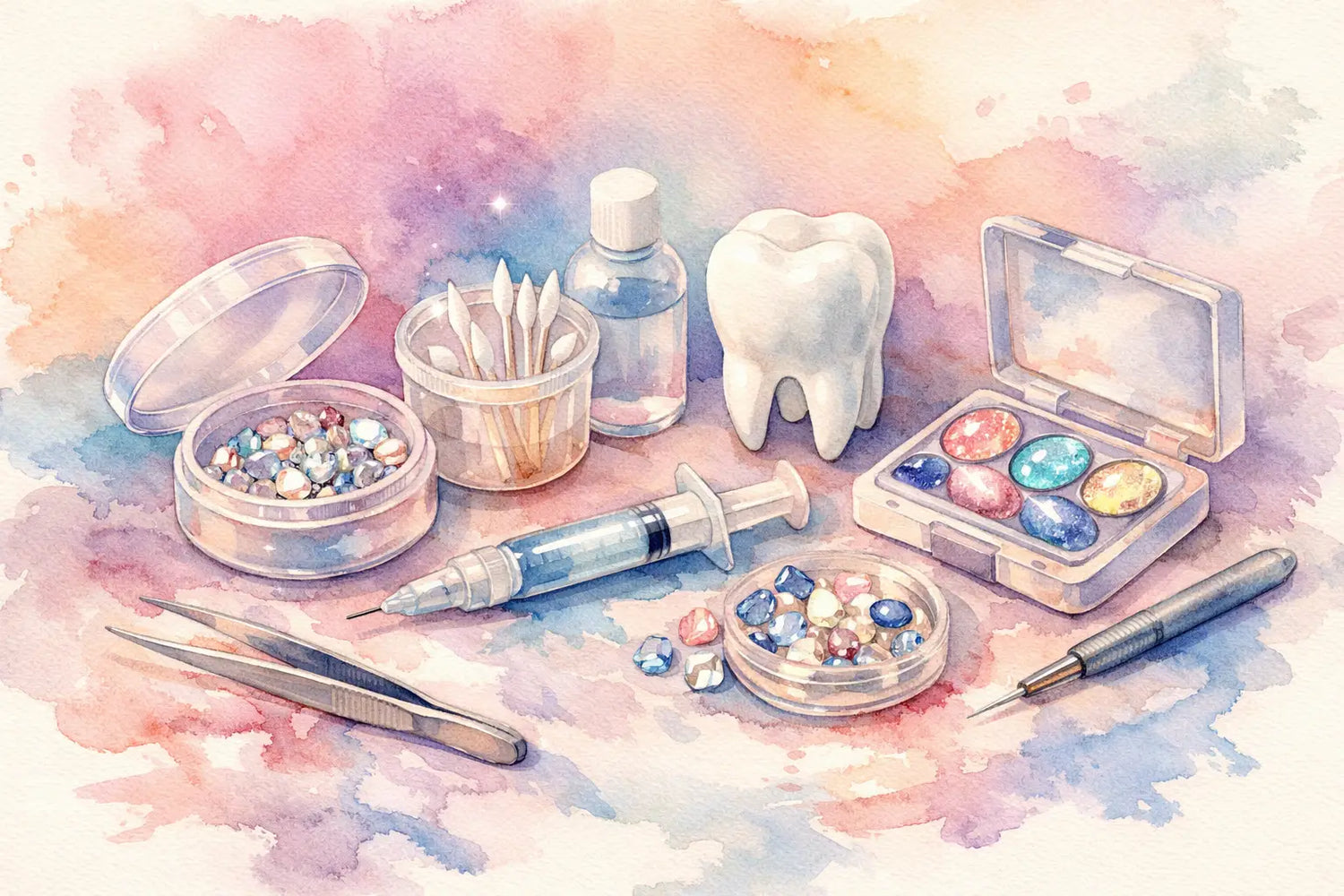
Un kit de bricolaje sólido incluye la gema en sí, materiales de preparación dental, productos adhesivos, herramientas de colocación y una lámpara de polimerización. No necesitas una bandeja desordenada con extras aleatorios, pero sí los elementos esenciales para trabajar en conjunto. Las Gemas dentales son diminutas, y el proceso de aplicaciónes detallado, por lo que cada material tiene una función.
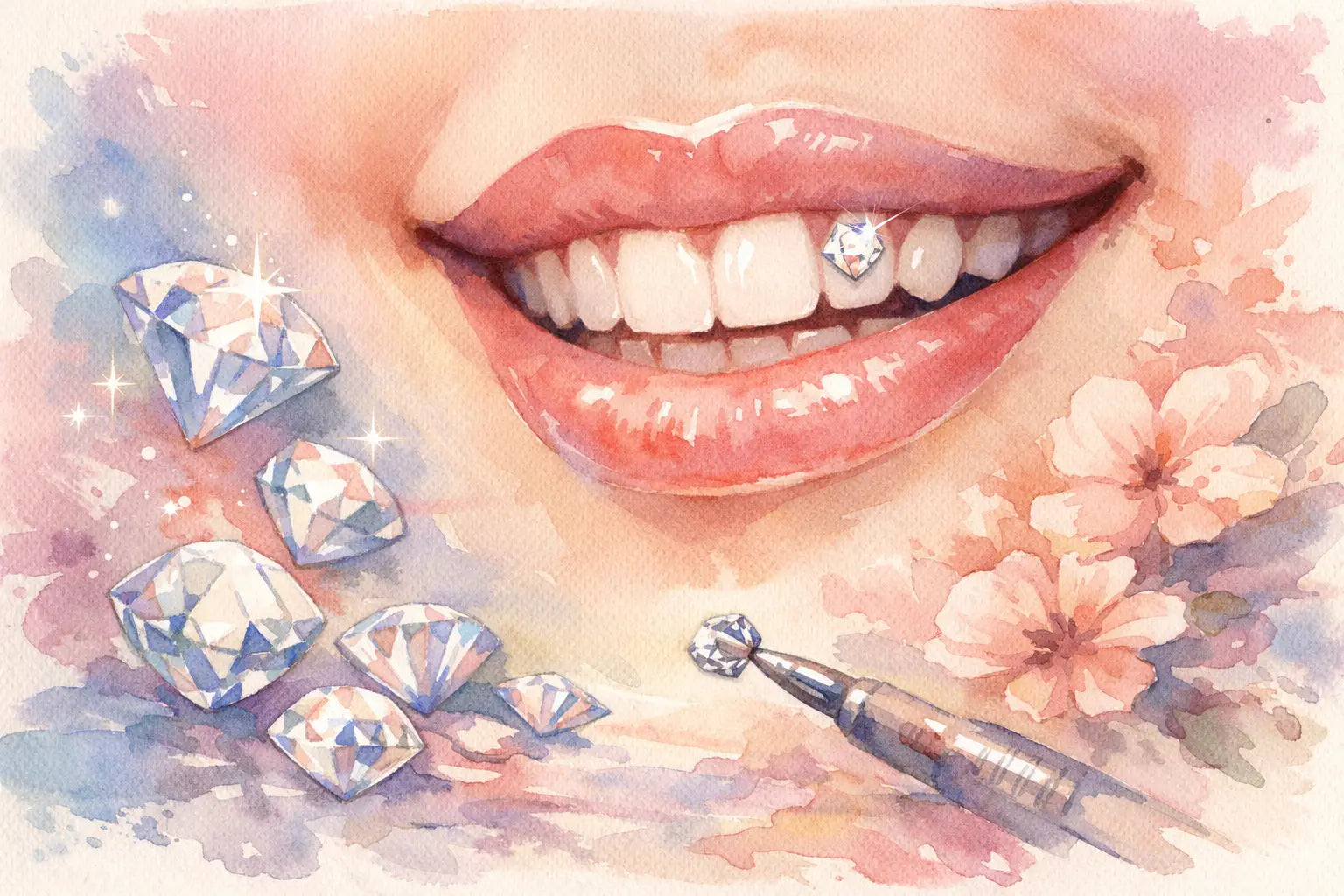
El artículo más evidente es la gema dental. Puede ser un cristal, una gema de estilo diamante, un corazón, una mariposa u otro diseño que se adapte a tu estilo. El estilo es importante, pero el tamaño también. Las gemas más pequeñas suelen ser más fáciles para principiantes porque pueden colocarse con mayor precisión y tienden a resultar menos intimidantes durante la primera aplicación.
Luego viene la parte química del proceso. La mayoría de los Kits de gemas dentales para hacer en casa utilizan grabado y adhesión para ayudar a que la gema se adhiera correctamente a la superficie del diente. El grabado prepara ligeramente el esmalte para que el adhesivo pueda agarrarse mejor. El Bond actúa como la capa adhesiva que ayuda a mantener la gema en su lugar una vez que se cura. Estos no son productos glamurosos, pero son la razón por la que el glamour perdura.
Una lámpara UV es otro elemento indispensable para la mayoría de los kits. Sin curado, el adhesivo no se fijará como debería. Esto significa que tu aplicación podría moverse, fallar prematuramente o sentirse inconsistente. Si quieres resultados pulidos en lugar de improvisados, el paso de curado es tan importante como la joya que elijas.
Los materiales principales y su función
Gema dental
Esta es tu pieza clave. Ya sea que desees un cristal sutil o una forma más atrevida, la joya debe estar diseñada para la aplicación cosmética dental en lugar de ser pedrería de manualidades reutilizada. La belleza y el ajuste van de la mano aquí. Una joya hecha para dientes está pensada para adherirse mejor a la superficie y combinarse con el resto del sistema de aplicación.
Grabar
El grabado prepara la superficie del diente para una mejor adhesión. Es un paso pequeño, pero hace gran parte del trabajo pesado. Saltárselo puede hacer que el proceso parezca más rápido en el momento, pero ese atajo a menudo afecta a qué tan bien se mantiene la gema.
Adhesivo
El adhesivo es lo que ayuda a fijar la joya al diente. Piénsalo como la capa que conecta tu preparación con el resultado final. Los diferentes sistemas varían ligeramente, pero el objetivo es el mismo: crear una sujeción fiable una vez curado.
Lámpara UV
La lámpara cura el adhesivo para que la joya se fije correctamente. Una luz de curado débil o inconsistente puede crear problemas, incluso si todo lo demás se hizo correctamente. Si estás armando tu propio kit en lugar de comprar uno prefabricado, este no es el lugar para escatimar.
Pinzas para joyas o herramienta de colocación
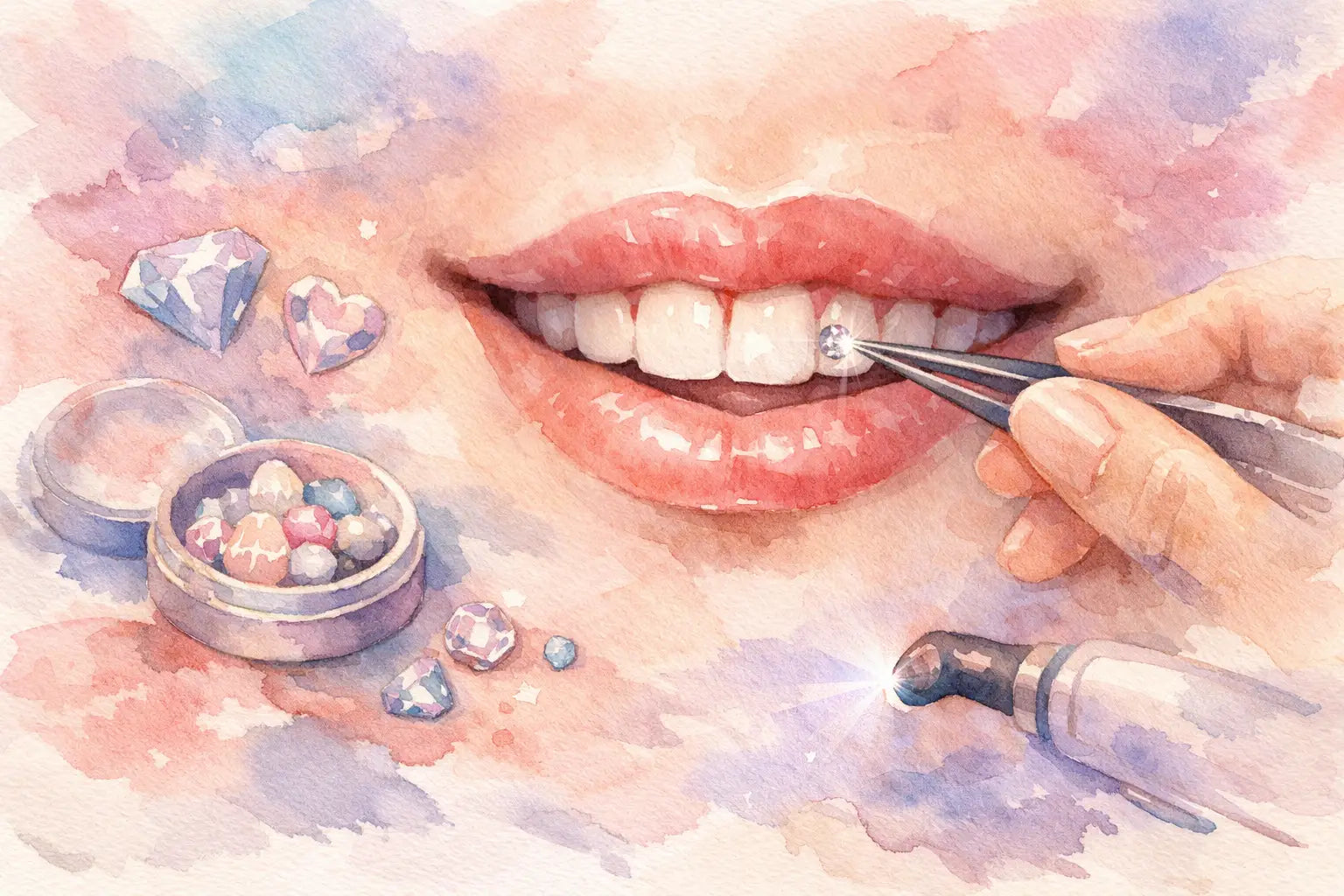
Las Gemas dentales son diminutas, resbaladizas y difíciles de colocar con los dedos. Una herramienta de colocación te ofrece más control y hace que el posicionamiento sea mucho menos frustrante. También te ayuda a alinear la gema antes del curado, lo cual es importante si te preocupa la simetría y el acabado general.
Rollos de algodón
Los rollos de algodón ayudan a mantener el área seca. La humedad es uno de los mayores enemigos de la adhesión, por lo que este pequeño material juega un papel más importante de lo que la gente espera. También hacen el proceso más cómodo al ayudar a controlar la saliva mientras trabajas.
Ganchos para mejillas o retractores de mejillas
Estos mantienen el área visible y más accesible. Si alguna vez has intentado colocar una pequeña joya mientras te manejas los labios y las mejillas al mismo tiempo, ya sabes por qué esto ayuda. Es una de esas herramientas que puede hacer que un principiante se sienta instantáneamente más seguro.
Materiales que la gente olvida, pero que normalmente desearía tener
Muchos compradores primerizos se centran en la joya y el adhesivo, y luego se dan cuenta a mitad de la aplicación de que la visibilidad y el control son igual de importantes. Una buena iluminación es uno de los detalles de configuración más pasados por alto. Quieres ver claramente el ángulo de colocación, especialmente si buscas un aspecto centrado o ligeramente descentrado en un diente frontal.
Una configuración de espejo limpia también es importante. Si tu espejo es demasiado pequeño o está mal posicionado, la colocación puede convertirse en una conjetura. A algunas personas también les gusta tener gasas o toallitas sin pelusa cerca para mantener el área ordenada durante la preparación.
También es posible que desee pensar en el tiempo. Una aplicación apresurada suele notarse. Tener sus materiales dispuestos en orden antes de comenzar puede hacer que todo el proceso sea mucho más fácil, especialmente si es la primera vez que intenta un look de belleza DIY que requiere curado.
Kit prefabricado o armar el tuyo?
Esto depende de tu nivel de comodidad. Si eres completamente nuevo, un kit prefabricado suele ser la opción más fácil porque los materiales están seleccionados para funcionar juntos. Eso elimina muchas dudas. Puedes centrarte en la parte divertida: elegir tu estilo de joya y aprender el proceso de aplicación.
Si ya conoces los conceptos básicos, armar tu propia configuración puede tener sentido. Quizás quieras una forma de joya específica, adhesivo extra o herramientas de reemplazo en lugar de comprar un kit completo de nuevo. Esa flexibilidad es genial, pero significa que debes ser más intencional con la lista de materiales.
Para la mayoría de los principiantes, la conveniencia es lo que gana. Un sistema curado se siente menos abrumador y te da un comienzo más optimizado. Esa es parte de la razón por la que marcas como SelfGem resuenan con compradores primerizos que desean el resultado elegante sin la cita en el salón.
Una lista inteligente de materiales de un kit de gemas dentales para principiantes
Si quieres la versión simple, tu kit para principiantes debe incluir un diseño de joya, grabador, adhesivo, una lámpara UV, pinzas para joyas, rollos de algodón y ganchos para mejillas. Eso cubre todo el flujo de aplicación, desde la preparación hasta la colocación y el curado.
Absolutamente puedes agregar más cosas más tarde, especialmente si quieres experimentar con diferentes formas de joyas o tener materiales de repuesto a mano. Pero para tu primera aplicación, el objetivo no es construir una gran estación de belleza. El objetivo es tener los productos adecuados para un comienzo limpio y seguro.
Por qué la calidad importa más que la cantidad
Es tentador pensar que más suministros automáticamente significan una mejor configuración. Por lo general, es lo contrario. Una lista más corta y bien elegida suele ser mejor que un kit voluminoso lleno de piezas que no entiendes o no usas.
Los factores de calidad más importantes son la compatibilidad, la facilidad de uso y la fiabilidad. Tu grabador, adhesivo y luz de curado deben funcionar como un sistema. Tu joya debe estar hecha para el estilismo dental cosmético. Tus herramientas deben ayudar con la precisión en lugar de hacer el proceso más incómodo.
Esto es especialmente cierto si le importan los resultados que se vean intencionales ante la cámara y en persona. Una sonrisa brillante se ve mejor cuando la colocación de la gema es prolija y la aplicación se siente segura. Ese acabado pulido proviene del uso de materiales que favorecen el control, no el caos.
Antes de comprar, piensa en tus objetivos de estilo
No todos los compradores quieren el mismo look. Si tu estilo es minimalista, un pequeño cristal puede ser suficiente. Si quieres un acabado más juguetón o expresivo, formas como corazones o mariposas pueden crear un momento de belleza más atrevido. Tu lista de materiales se mantiene en gran medida igual, pero tu elección de joya cambia el efecto general.
También ayuda pensar en la frecuencia con la que planeas usar gemas dentales. Si se trata de un look de una sola vez para un viaje, evento o sesión de contenido, una configuración sencilla puede ser perfecta. Si crees que las gemas dentales podrían convertirse en parte de tu rutina de belleza habitual, invertir en herramientas fiables tiene más sentido.
Ese equilibrio entre belleza y practicidad es lo que hace que un kit DIY valga la pena. Quieres productos que apoyen tu estilo, pero que también hagan que el proceso sea lo suficientemente fácil como para repetirlo.
Errores comunes al armar tu kit
El primer error es comprar solo la joya y asumir que eso es suficiente. El segundo es subestimar el paso de preparación. El tercero es omitir herramientas que facilitan la colocación, y luego frustrarse cuando la joya no se asienta donde quieres.
Otro problema común es tratar todos los adhesivos o luces como intercambiables. No siempre lo son. Una configuración incompatible puede llevar a resultados desiguales, que es exactamente lo que la mayoría de los principiantes intentan evitar.
Si quieres una experiencia más fluida, céntrate en los elementos esenciales que apoyan la adhesión, la visibilidad y el control. Esa combinación es lo que convierte una idea inspirada en una tendencia en un look usable y radiante.
Una buena configuración de gema dental debe ser emocionante, no confusa. Si tu lista de materiales es sencilla, completa y está hecha para la belleza DIY, ya estás mucho más cerca del acabado brillante que deseas. Si buscas la forma más fácil de cubrir lo esencial de una sola vez, el colección de materiales y herramientasfacilita la construcción de una configuración completa para tu próximo look.