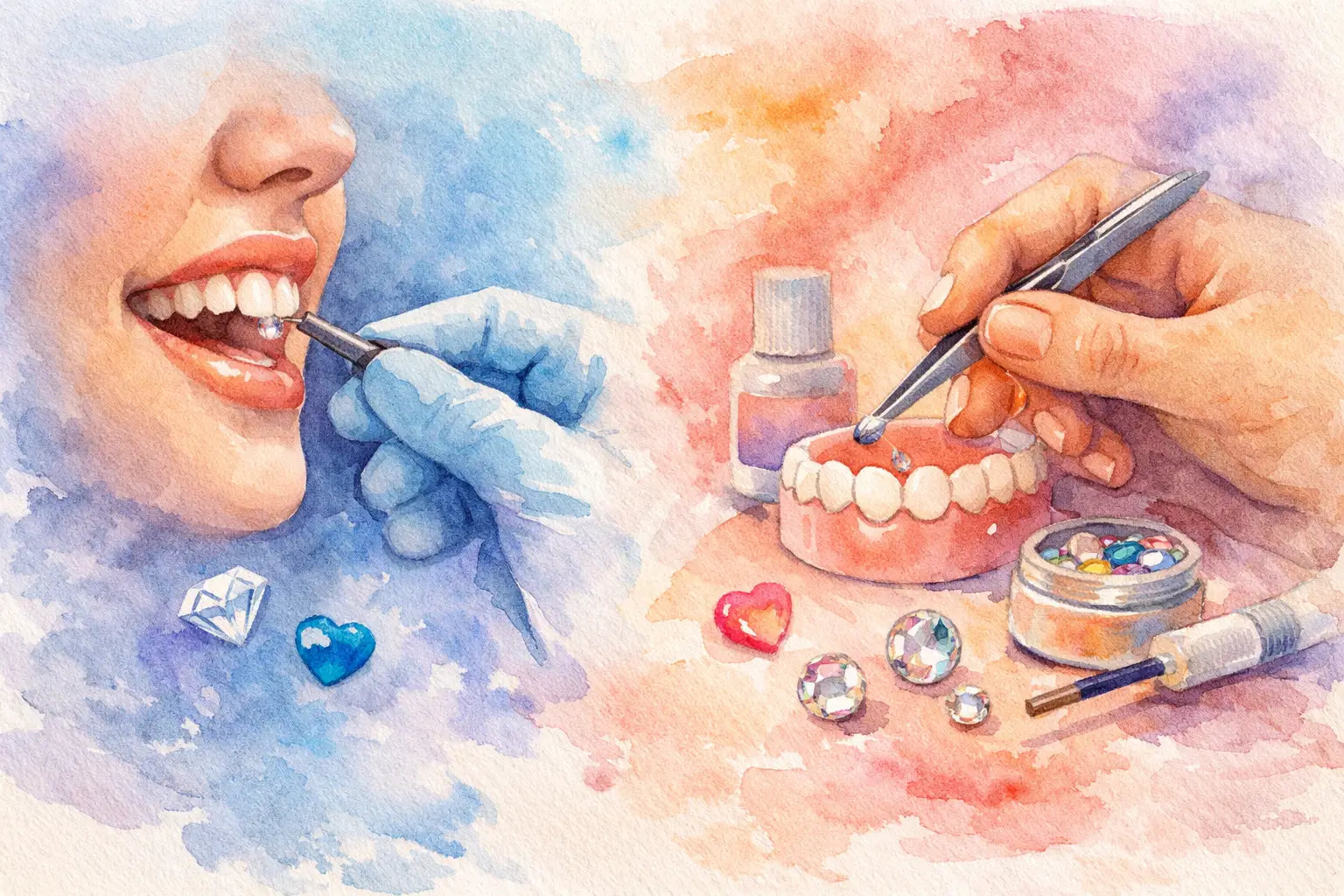
Un pequeño cristal puede cambiar toda tu sonrisa, pero la verdadera pregunta va más allá del estilo: ¿están las gemas dentales aprobadas por los dentistas? La respuesta honesta es sí, a veces, pero depende del material, la ubicación y, especialmente, de cómo se aplica y se retira la gema. Los dentistas no suelen oponerse a la estética de las gemas dentales. Lo que les preocupa es si el esmalte se mantiene sano durante el proceso.
Esa distinción es importante. Una gema dental aplicada correctamente es un accesorio cosmético adherido a la superficie del diente. No debería requerir perforación y no debería cambiar permanentemente la estructura dental. Cuando la gente escucha que las gemas dentales son "seguras", eso es generalmente lo que quieren decir: seguras cuando se realizan correctamente en un diente sano con productos seguros para uso dental y un buen cuidado posterior.
¿Están las Gemas dentales aprobadas por dentistas en todos los casos?
No en todos los casos, y de ahí proviene mucha confusión. Los dentistas generalmente se sienten más cómodos con las Gemas dentales cuando se adhieren al esmalte natural utilizando materiales similares a los que se usan para los brackets de ortodoncia. Se sienten mucho menos cómodos con cualquier cosa que implique perforar el diente, limar el esmalte, usar pegamentos aleatorios o colocar gemas sobre caries, grietas, carillas o áreas dañadas.
Así que, si buscas una respuesta sencilla de sí o no, aquí la tienes: las Gemas dentales pueden estar aprobadas por dentistas cuando se aplican de una manera que protege el esmalte. No están aprobadas automáticamente solo porque estén de moda, sean bonitas o se vendan en línea.
Una buena regla es pensar en el proceso, no solo en el producto. Un cristal en sí mismo no es el problema. Una mala preparación, un adhesivo agresivo o una eliminación descuidada sí lo son.
Cuándo es más probable que un dentista diga que sí
Es mucho más probable que un dentista apruebe las gemas dentales cuando el diente está sano, el esmalte está intacto y la gema se adhiere sin perforar. Las gemas pequeñas y ligeras suelen ser una mejor opción que las formas de gran tamaño que pueden engancharse en los labios o crear más trampas para la placa.
También ayuda cuando la persona que lleva la gema se compromete a cepillarse con cuidado, usar hilo dental de forma constante y evitar hábitos como morderse las uñas, masticar hielo o abrir paquetes con los dientes. Las gemas dentales son accesorios de belleza, pero tus dientes aún tienen que realizar su trabajo diario en la vida real.
Cuándo un dentista puede decir que no
Si tienes problemas dentales no tratados, la aprobación es mucho menos probable. Una gema nunca debe usarse para cubrir decoloración, grietas o una mancha que en realidad podría necesitar tratamiento. Eso puede retrasar la atención y empeorar un problema pequeño.
Los dentistas también pueden negarse si el método de aplicación suena arriesgado. Super pegamento, pegamento para uñas, adhesivo para manualidades o cualquier producto de unión no dental es un no inmediato. Esos materiales no están diseñados para uso oral y pueden irritar los tejidos o dañar la superficie del diente.
La diferencia entre una aplicación segura y una aplicación arriesgada
Aquí es donde la conversación se vuelve práctica. Un enfoque aprobado por dentistas suele ser aquel que mantiene el esmalte lo más intacto posible. La superficie se limpia, se prepara con materiales dentales adecuados, se adhiere con cuidado y se cura para que la gema permanezca en su lugar sin una alteración agresiva del diente.
La aplicación arriesgada suele parecer atajos. Omitir la preparación, calcular la colocación a ojo, sobrecargar el adhesivo o usar productos no destinados a los dientes pueden aumentar la posibilidad de problemas. Incluso si la gema se adhiere al principio, eso no significa que se haya hecho bien.
Para los compradores de "hazlo tú mismo", eso no significa que la aplicación en casa sea automáticamente mala. Significa que la calidad del sistema importa. Si estás usando un Kit de gemas dentales para principiantes con materiales seguros para los dientes e instrucciones claras, estás mucho más cerca de lo que los dentistas quieren ver que si improvisas con suministros al azar.
¿Están las gemas dentales de bricolaje (DIY) aprobadas por los dentistas?
Esta es la parte que la mayoría de la gente realmente quiere que se responda. Los dentistas suelen ser cautelosos con el "hazlo tú mismo" porque no pueden controlar la técnica, la calidad del producto o el saneamiento. Dicho esto, su preocupación es por los estándares, no por la idea de hacerlo en casa en sí.
Una aplicación cuidadosa en casa puede ser una opción razonable si los productos están hechos para la unión cosmética de dientes, el diente está sano y sigues las instrucciones de cerca. Cuanto más se parezca tu configuración a un proceso cosmético adecuado con el grabado y adhesivo correcto, más cómodo se sentiría un profesional dental con él.
Si eres nuevo en el mundo de las gemas dentales, lo más inteligente es mantener la sencillez. Elige una gema pequeña, aplícala solo sobre un diente natural limpio y no fuerces el proceso si algo no se siente bien. Lo que está de moda también debe ser meditado.
Cómo saber si la colocación de una gema dental es más respetuosa con la salud dental
Empieza por lo básico. Los materiales deben estar diseñados para la aplicación dental, no para manualidades generales o uso de belleza. Las instrucciones deben ser específicas, no vagas. Debes saber cómo preparar el diente, cómo aplicar el kit correctamente y cómo cuidar la gema después.
También conviene buscar afirmaciones realistas. Ninguna marca de confianza debería prometer un mantenimiento nulo o un uso permanente sin contrapartidas. Las gemas dentales no son de alto riesgo cuando se manipulan correctamente, pero aun así requieren respeto. El enfoque más aceptado por los dentistas es aquel que trata la joyería dental como una adhesión cosmética, no como una pegatina.
Por eso la educación importa tanto como el brillo. Las marcas que explican la higiene, el tiempo de uso y la eliminación tienden a respaldar mejores resultados que las marcas que solo venden la estética.
¿Qué pasa con la eliminación?
La eliminación es una de las mayores razones por las que los dentistas se ponen nerviosos, y con razón. Una gema puede colocarse bien y aún así crear problemas más tarde si alguien intenta quitarla en casa con herramientas de metal, pinzas o fuerza. Así es como se astilla el esmalte.
Una mentalidad aprobada por dentistas significa pensar con anticipación. Si la gema se afloja, se siente áspera o quieres quitarla, la opción más segura es la eliminación profesional. Si has aplicado una gema en casa, eso no significa que estés atascado con ella para siempre. Simplemente significa que la eliminación debe hacerse con cuidado, idealmente por alguien que pueda proteger el esmalte y pulir el material de unión sobrante correctamente.
¿Son las gemas dentales malas para los dientes con el paso del tiempo?
Pueden ser neutrales o pueden convertirse en un problema. Depende de cómo se colocaron y de lo bien que los cuides después. Una gema bien adherida en un diente sano puede permanecer allí con problemas mínimos. Una gema mal colocada en un diente que ya tenía problemas puede provocar retención de placa, manchas alrededor de los bordes o irritación.
El cepillado es más importante una vez que tienes una gema. No es necesario frotar con agresividad, pero sí hay que limpiar a fondo a su alrededor. Si el área se siente difícil de limpiar, atrapa comida con frecuencia o empieza a verse opaca o blanquecina alrededor de la unión, esa es una señal para prestar atención y posiblemente consultar con un profesional dental.
La verdadera respuesta a si las gemas dentales están aprobadas por los dentistas
Sí: muchos dentistas pueden aceptar las gemas dentales como una opción cosmética cuando se aplican sobre esmalte sano con materiales seguros para uso dental y se retiran correctamente. No: los dentistas no aprueban de forma generalizada la aplicación descuidada, el pegamento inseguro, el daño al esmalte o el uso de gemas para cubrir problemas dentales reales.
Puede que esa no sea la respuesta ultrasencilla que las redes sociales desean, pero es la más útil. Las Gemas dentales viven en ese espacio donde la belleza y el cuidado se encuentran. Puedes optar por ese aspecto radiante sin dudarlo, pero el mejor brillo es aquel que no le cuesta la salud a tu esmalte.
Si quieres que tu sonrisa brille, mantén el estándar alto. Elige materiales seguros, sé honesto acerca de tu salud bucal y trata el proceso con el mismo cuidado que le das al resto de tu rutina de belleza. Un pequeño cristal debe sentirse como una mejora, no como una apuesta. Si quieres mantener tus opciones simples, empezar con el colección de gemas dentales hace que sea más fácil elegir un estilo que se ajuste a un enfoque más cuidadoso y consciente del esmalte.