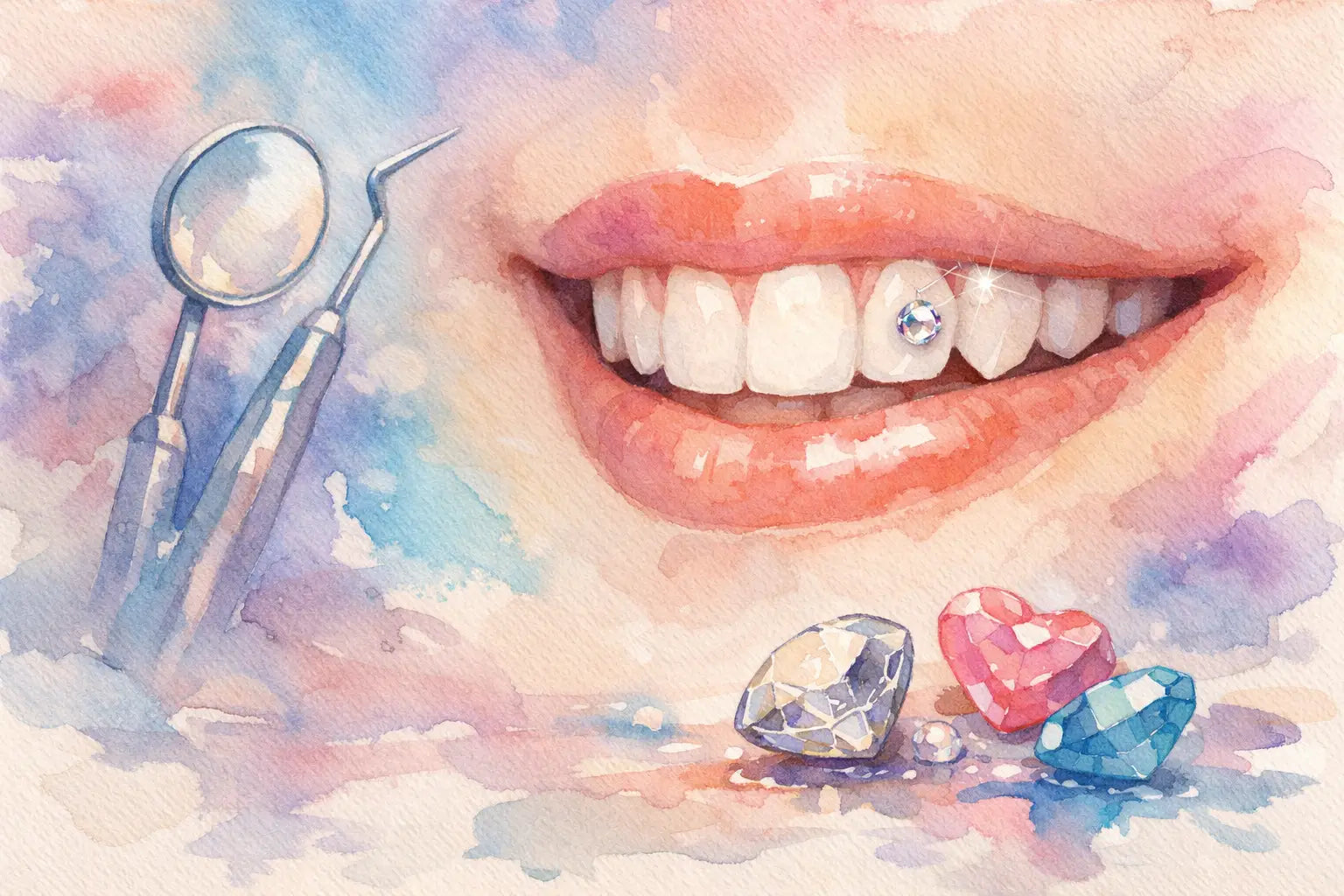
A tooth gem that pops off the same day is a vibe killer. If you’re wondering why tooth gems fall off, the short answer is usually application, placement, or aftercare - not the gem itself.
The good news is that tooth gems are not supposed to fall off right away when they’re applied correctly. A well-placed gem on a clean, healthy tooth can last for weeks or even much longer, depending on the materials used, your habits, and how precise the bonding process was. So if yours came off fast, there’s usually a fixable reason behind it.
Why tooth gems fall off in the first place
Tooth gems stay on because a bonding material attaches the flat back of the gem to the enamel. That bond needs a very clean, very dry surface and the right curing process. If any part of that chain is rushed or slightly off, the gem may look secure at first but loosen soon after.
One of the biggest reasons a gem falls off is moisture contamination. Teeth naturally stay wet, and even a little saliva can interfere with adhesion. That’s why isolation matters so much during application. If the tooth is not kept dry from start to finish, the bond can weaken before it ever has a chance to fully set.
Surface preparation is another common issue. A tooth has to be properly cleaned before etch and bond are applied. If there’s plaque, oil, leftover toothpaste residue, or even lip product transferring onto the area, the adhesive may not grip as well as it should. This is one of those small details that makes a huge difference.
Then there’s curing. If the UV light is not used correctly, or if the adhesive isn’t cured long enough, the gem can shift or detach early. On the flip side, using the right tools and following timing carefully can make a DIY application much more reliable.
The application mistakes that make tooth gems fall off
A lot of early gem loss comes down to technique. That does not mean DIY tooth gems can’t work. It means the process has to be taken seriously, even though the result looks playful and effortless.
The tooth wasn’t dry enough
This is the most common problem. Saliva control is not glamorous, but it matters. If the tooth gets wet after etching, after bonding, or right before placement, the adhesive may not hold properly. A good setup with the right materials and tools helps more than people expect.
The tooth wasn’t prepped properly
Skipping prep can save a few minutes and cost you the whole gem. The enamel needs to be clean, then etched according to instructions, then bonded correctly. If one of those steps is shortened or missed, the gem may stick temporarily but not last.
Too much or too little adhesive was used
Adhesive placement is a balance. Too little, and the gem won’t have enough hold. Too much, and the gem can slide, sit unevenly, or cure awkwardly around the edges. A neat, controlled amount usually gives the best result.
The gem was placed on the wrong area
Not every spot on your tooth is ideal. If a gem is placed where it hits your bottom teeth, rubs against your lip constantly, or sits on an uneven surface, it’s more likely to get knocked loose. Flat, visible areas that do not deal with heavy bite pressure tend to hold better.
The gem moved before the bond fully set
Even a tiny shift during placement can affect wear time. Once the gem is positioned, it needs to stay put while curing happens. Fidgeting with it using your tongue right away is one of the fastest ways to shorten its lifespan.
Why some teeth hold gems better than others
It depends on the tooth. Front teeth are popular because they show well in photos and usually avoid the chewing pressure that back teeth handle. But even among front teeth, surface shape matters.
A flatter enamel area often makes bonding easier. If the tooth is very curved, very small, or has texture issues, the gem may not sit as securely. That doesn’t mean it cannot work - it just means placement may need a little more care and realistic expectations.
Dental condition matters too. Tooth gems should only be applied to healthy enamel. If a tooth has decay, cracks, existing damage, or certain restorations like crowns or veneers, the bond may be unreliable or not recommended. Natural enamel gives the best base for adhesion.
Aftercare habits that can make a gem fall off
Sometimes the application was fine, but aftercare cut the wear time short. The first day matters a lot because the bond is still settling into real-life wear.
Crunching ice, biting hard candy, tearing open packages with your teeth, or chewing directly on the gem side can all put extra pressure on it. Even if the gem looks tiny, it still needs a little protection. Think of it like fresh beauty work - cute, durable, but not invincible.
Brushing matters too. You should still brush your teeth, of course, but aggressive scrubbing directly over a new gem can weaken it. Gentle brushing with a soft-bristle toothbrush is the better move, especially in the first 24 hours.
Tongue play is another sneaky reason gems come off. People naturally check on a new tooth gem with their tongue all day. That repeated pressure adds up, especially if the bond was already borderline.
Why professional-looking results still depend on materials
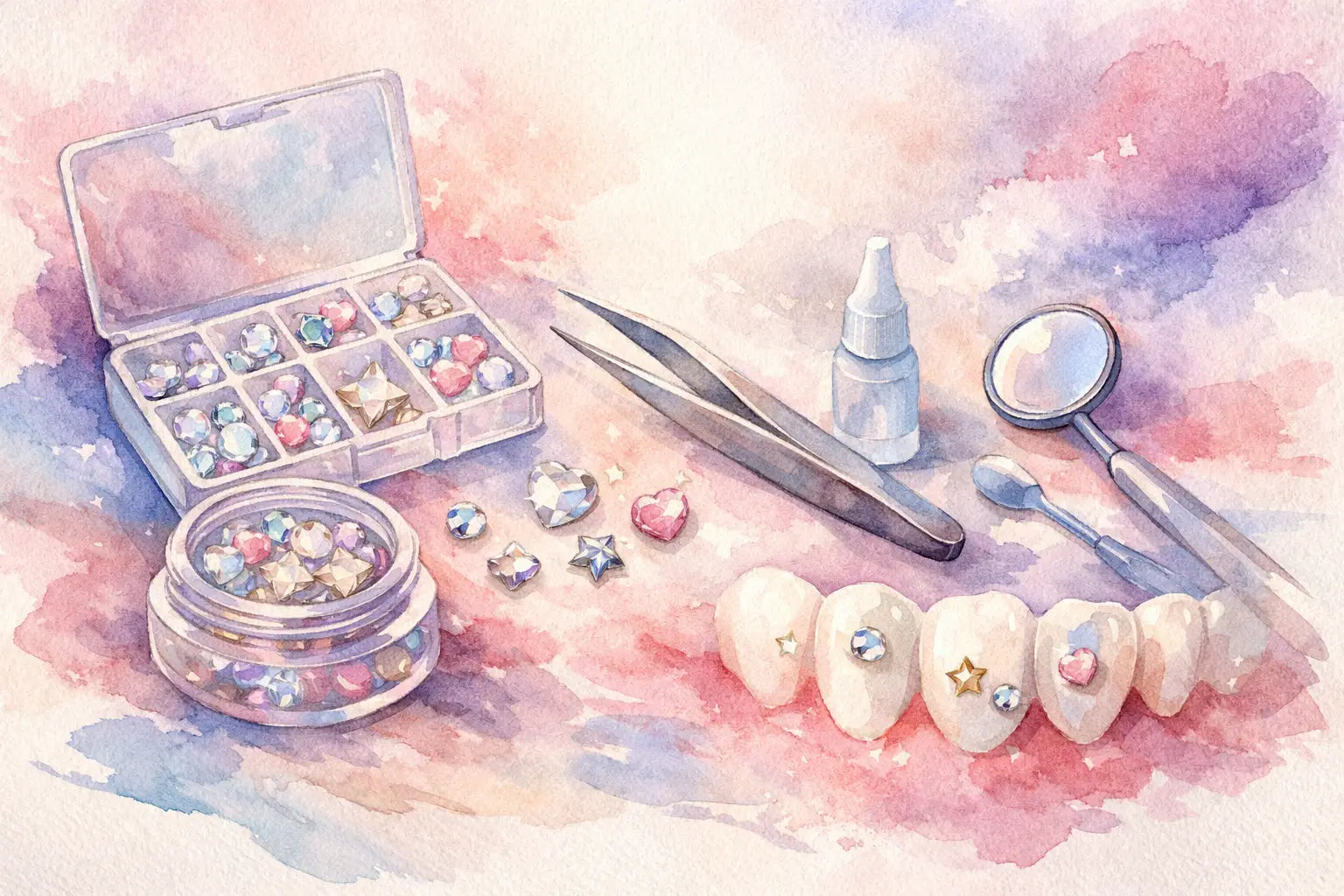
Technique matters, but so do the products used. If the etch, bond, curing light, or gem backing isn’t designed for this kind of application, the result may not last. This is where a complete system helps because the pieces are meant to work together.
A flat-backed gem is usually more stable than a shape that does not sit flush against the tooth. The right bonding products also create a cleaner, stronger attachment than improvised beauty glue or craft adhesive, which should never be used on teeth.
That’s why beginners often do better with an all-in-one setup instead of trying to piece together random tools. A DIY process can feel much easier when the instructions, accessories, and materials are built around tooth gem application specifically.
How to make a tooth gem last longer
If you want longer wear, slow down during prep and be a little protective afterward. Most wear-time issues start with rushing.
Start with a very clean tooth and keep the area dry the entire time. Follow the etch and bond instructions exactly, not approximately. Place the gem carefully, cure it fully, and avoid eating hard or sticky foods right after application. Then be mindful for the first day or two instead of testing it every five minutes with your tongue.
It also helps to choose a placement that looks cute and makes sense for your bite. A sparkling smile should feel easy, not awkward. If the gem is in a spot that constantly catches pressure, you’re working against yourself from the start.
For at-home users, this is where beginner-friendly kits can make a big difference. A DIY tooth gem kit or one of the prepackaged DIY tooth gem kits makes the process more approachable, especially if you want a stylish result without guessing your way through every step.
When a fallen tooth gem is not a big deal
Sometimes a gem falls off and nothing is wrong with your tooth. The adhesive bond simply failed, often because of moisture, prep, or pressure. If the tooth feels normal and looks fine, it may just mean the application needs to be redone more carefully.
That said, if you feel pain, notice sensitivity, or see any damage on the tooth, it’s smart to pause and get professional dental advice before trying again. Beauty should never come at the expense of your enamel.
So, are tooth gems supposed to fall off?
Eventually, yes. Immediately, no.
Tooth gems are semi-temporary accessories, not forever jewelry. Even with a solid application, daily eating, brushing, and movement can wear down the bond over time. But there’s a big difference between a gem lasting a reasonable amount of time and one falling off by dinner.
If yours came off fast, it usually points to a fixable issue - too much moisture, rushed prep, off placement, weak curing, or rough aftercare. Once you know what affects wear time, getting a longer-lasting, radiant look becomes much more realistic.
A little extra care during application can be the difference between a gem that disappears in hours and one that keeps your smile sparkling long enough to actually enjoy it. If you need to restock the essentials for a cleaner reapplication, a refill pack is an easy way to keep your setup complete.