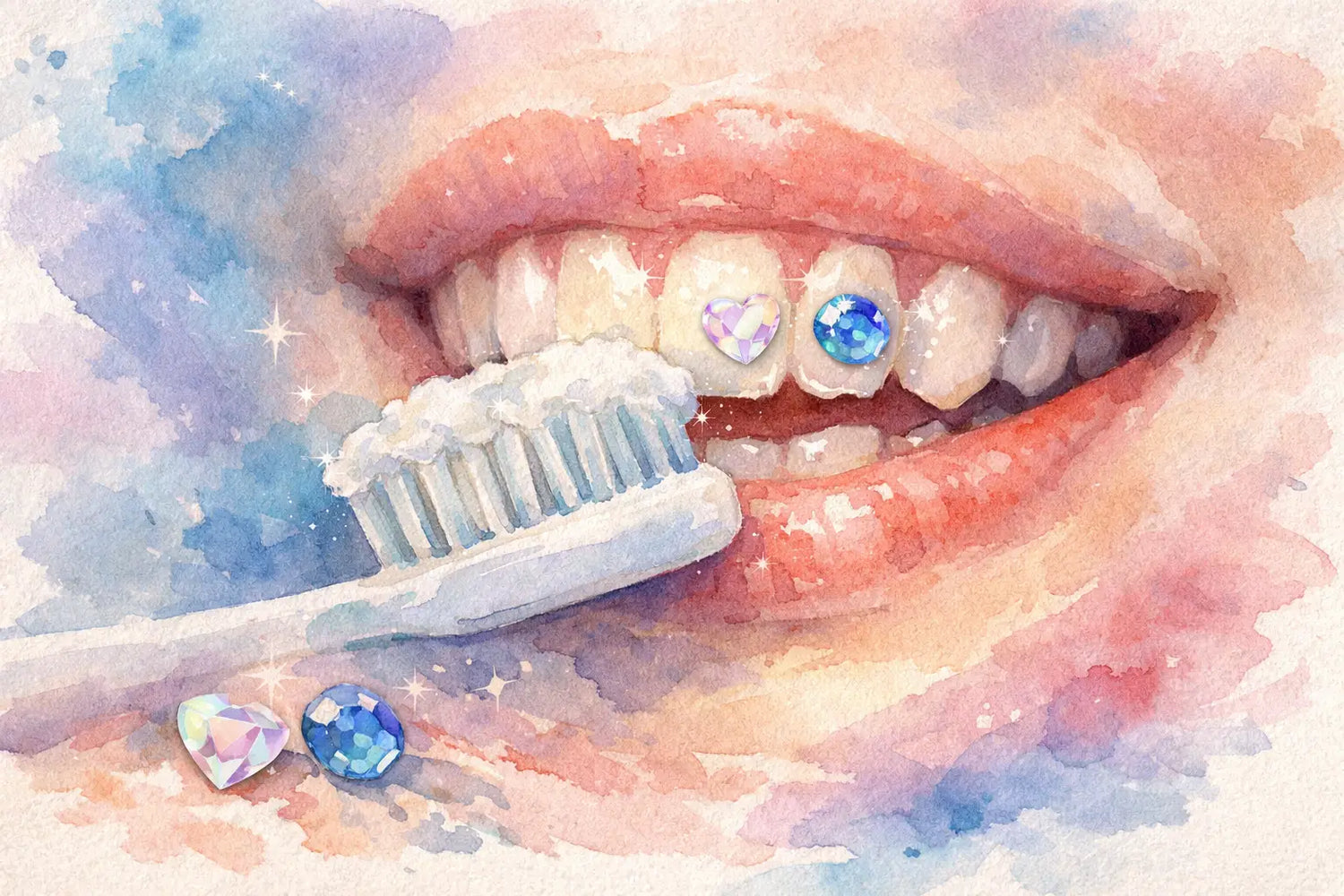
That first post-application brush can feel a little nerve-wracking. If you're staring at your sparkling smile and wondering, can you brush tooth gems without knocking them off, the short answer is yes - absolutely. You should brush your teeth with tooth gems on. The key is brushing the right way, using gentle pressure, and giving the adhesive a little respect, especially in the first day after application.
Tooth gems are meant to sit on the surface of the tooth while you go about normal life. That includes smiling, talking, drinking, and yes, brushing. A gem should not turn your oral care routine into something complicated. If anything, wearing one should make you a little more aware of keeping your teeth clean so your look stays bright and polished.
Can you brush tooth gems every day?
Yes, and you need to. Skipping brushing because you're worried about the gem is a mistake. Plaque can still build up around the gem, and if the tooth around it starts looking dull or stained, the gem won't look as cute for long.
Daily brushing helps keep the area around the gem clean and helps your whole smile stay fresh. A tooth gem is decorative, but it sits in a place where hygiene matters. You do not want food debris hanging around the edges or a fuzzy feeling on the tooth surface. The sparkle hits differently when the tooth itself looks healthy.
That said, everyday brushing does not mean aggressive scrubbing. Think clean, not harsh. Tooth gems hold up best when your routine is consistent and gentle.
How to brush with a tooth gem on
The best way to brush with a tooth gem is to treat it like a delicate detail, not a stain you're trying to scrub away. Use a soft-bristled toothbrush and small circular motions. Let the bristles clean around the gem instead of jamming straight into it with pressure.
If you use an electric toothbrush, you usually can keep using it, but be mindful. A powerful brush head pressed hard against the gem over and over is not the same as a light pass over the area. Most people do fine with an electric toothbrush if they are not heavy-handed. If you know you brush aggressively, a soft manual brush can feel easier to control.
Your toothpaste matters too. A standard, non-abrasive toothpaste is usually the safest bet. Whitening formulas that feel gritty or extra abrasive can be rough on the tooth surface and may make the area around the gem less polished over time. The goal is clean teeth, not a sanding session.
The first 24 hours matter most
If your tooth gem was just applied, be extra careful during the initial setting period. This is when the bond is most vulnerable. You still want to keep your mouth clean, but avoid pressing hard directly on the gem.
A lot depends on the adhesive system used and how well the application was done. A properly applied gem with the right prep tends to hold much better than one placed on a rushed or poorly dried tooth. That is one reason beginner-friendly application steps and the right etch and bond setup make such a difference when doing a gem at home.
During that first day, brush gently and avoid testing the gem with your toothbrush, fingers, or tongue. People do this without realizing it. The gem starts to feel new, so you keep checking if it's still there. That habit can be harder on the bond than brushing itself.
What can make a tooth gem fall off while brushing?
Brushing alone usually is not the problem. Technique is. The biggest issues are using a hard-bristled brush, brushing with too much force, or repeatedly hitting the gem from an awkward angle. If the gem was not bonded well to begin with, even a normal brushing routine can expose that weakness.
There is also a difference between a small crystal and a larger, more raised design. Tiny gems tend to be lower profile and easier to brush around. Bigger or more detailed shapes can catch more contact from the brush, which means you may need to be a little more intentional.
Another factor is where the gem sits. A gem placed on a flatter front tooth surface often feels easier to maintain than one placed closer to an edge or in a spot that gets more friction. That does not mean placement near an edge never works. It just means daily habits matter more.
Keeping your tooth gem clean without overdoing it
A clean gem looks brighter. A dirty gem looks cloudy fast. The temptation is to over-clean it, but that usually backfires. You do not need special scrubbing tools or a complicated routine.
Brush twice a day, floss normally, and rinse your mouth after foods that leave residue. If something gets stuck near the gem, gently brush the area instead of picking at it. Avoid using your nails, tweezers, or anything metal to clean around it. That can loosen the gem or scratch the tooth surface.
Mouthwash can be part of your routine too, especially if you like that fresh finish. Just stick with products that are not intensely harsh if your mouth is sensitive. The gem does not need luxury treatment, but it does need common sense care.
Can you brush tooth gems with whitening toothpaste?
Sometimes, but this is where it depends. Mild whitening toothpaste may be fine for some people, especially if it is not highly abrasive. Stronger formulas designed to lift heavy staining can be rougher on enamel and may create uneven brightness around the gem over time.
There is also the aesthetic side of it. A gem covers a tiny part of your tooth. If you use whitening products aggressively for a long time, the exposed tooth may lighten while the covered spot stays the same. Once the gem comes off, that contrast can become noticeable for a while.
If keeping your smile bright is part of your beauty routine, gentler products usually make more sense than anything intense. Think glow, not overcorrection.
Signs you're brushing too hard
If the area around your tooth gem feels sore, your gums are irritated, or you notice the gem catching more than usual, take that as a sign to ease up. You might also see your toothbrush bristles fray quickly. That is less about the brush and more about the pressure you're using.
A secure gem should not make brushing painful. If it does, something is off. It could be technique, placement, or the gem beginning to loosen. In that case, gentler brushing is the first move. If the gem feels unstable, avoid pushing on it and reassess before it fully detaches.
What if the gem feels loose?
Do not try to brush it back into place. If a gem feels wiggly, catches on your brush, or seems like it is lifting at the edge, treat it carefully. A loose gem is unlikely to become more secure on its own.
At that point, the smartest move is to stop messing with it. Do not glue it down with random adhesive, and do not keep tapping it with your toothbrush to see if it survives. If it comes off, it comes off. The upside is that tooth gems are meant to be style-forward and low-commitment, so losing one is annoying, not catastrophic.
If you're applying gems at home, using a complete system with proper prep materials, bonding products, and curing tools gives you a much better shot at long wear and easier maintenance. That's where a well-designed DIY tooth gem kit or ready-made option from prepackaged DIY tooth gem kits makes the whole process feel less intimidating and more polished.
The best brushing routine for a sparkling smile
The sweet spot is simple: use a soft toothbrush, gentle pressure, and a non-abrasive toothpaste. Brush around the gem carefully, not fearfully. Keep flossing, keep your regular hygiene routine, and avoid picking at the gem just because it's cute and new.
It also helps to stay realistic. Tooth gems are durable, but they are not indestructible. Crunching ice, chewing on hard objects, grinding your teeth, and brushing like you're scrubbing tile can all shorten their lifespan. A little care goes a long way.
The good news is that brushing does not have to ruin the look. In fact, proper brushing is part of what keeps the gem looking expensive, clean, and intentional instead of like a trend you forgot to maintain.
If you want your smile to stay radiant, treat the gem like the finishing detail it is. Brush gently, stay consistent, and let the sparkle do its thing. If you ever need extra application essentials later on, a refill pack is a practical way to keep your setup complete.